Laboratories play a key role in scientific discoveries, where various experiments and tests are performed. Chemicals are the foundation of these activities, enabling countless reactions and processes. From simple tests to complex procedures, using the right chemicals is crucial for advancing knowledge and solving practical problems.
Laboratory chemicals are chosen for their unique properties, allowing scientists to perform experiments accurately and efficiently. They are used in many fields, such as medicine, biology, physics, engineering, and environmental science. These chemicals are used for tasks ranging from developing new medicines to analyzing environmental pollutants, making their availability and proper handling critical.
Below is a comprehensive list of commonly used laboratory chemicals and their specific applications, providing insights into their indispensable role in science and industry.
1. Acetone
Acetone is an organic colorless compound with a pungent odor. It has the chemical formula (CH3)2CO and also known as 2- propanone or dimethyl ketone. It is one of the simplest and most commonly used organic solvents in both industrial and household applications.


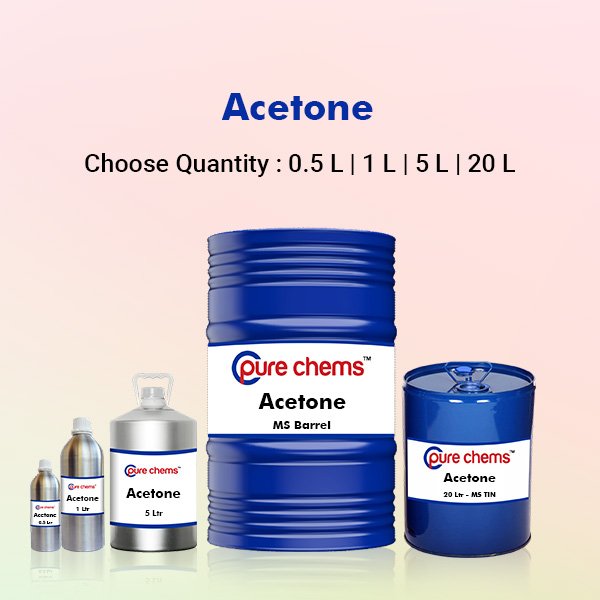 Acetone C3H6O | CAS No: 67-64-1 | Purity 99% | Best Quality
₹293.00 – ₹11,000.00Price range: ₹293.00 through ₹11,000.00
Acetone C3H6O | CAS No: 67-64-1 | Purity 99% | Best Quality
₹293.00 – ₹11,000.00Price range: ₹293.00 through ₹11,000.00
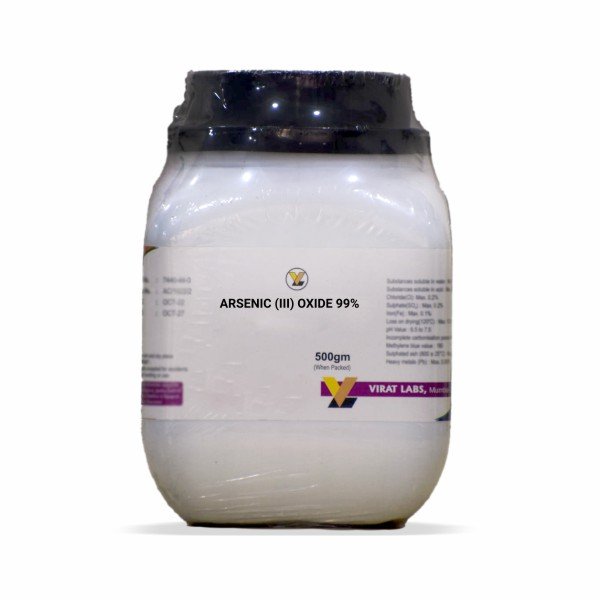 Arsenic III Oxide | Arsenic trioxide (As2O3) | 99 Percent